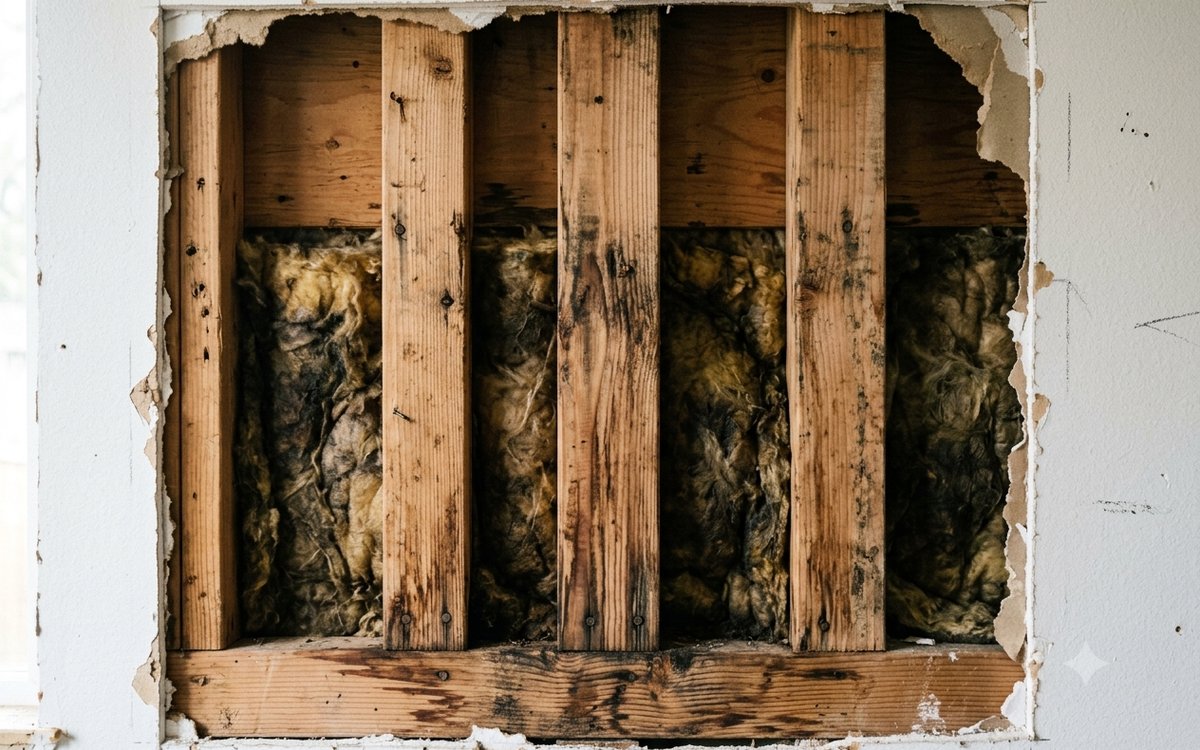
Spore trap air sampling and surface sampling analyzed by an accredited independent laboratory, interpreted against an outdoor baseline.
There are more than one hundred thousand known mold species, and only a few dozen commonly grow indoors. Color tells you almost nothing. The black staining on a bathroom ceiling is frequently a harmless surface mildew, while a genuinely aggressive species can appear white, olive, or barely visible at all. Species identification requires laboratory analysis under a microscope.
Testing answers three questions a visual inspection cannot: what is present, at what concentration, and whether the indoor environment differs meaningfully from the outdoor air surrounding the building.
There is no federal or state threshold that defines a safe indoor spore count, which is why any company quoting you an official limit is inventing one. The accepted approach compares indoor samples to the outdoor baseline. In a normal building, the indoor spore types mirror the outdoors at equal or lower concentrations. A problem shows up as amplification: a species present indoors far above outdoor levels, or a species that does not belong in the outdoor profile at all.
Certain findings carry more weight than raw counts. Chaetomium and Stachybotrys are water-damage organisms that generally indicate sustained saturation rather than ordinary humidity, and finding either changes the conversation regardless of how modest the numbers look.
Standard laboratory turnaround is two to three business days. Expedited analysis is available when a closing date, a move-in, or a health concern will not wait. You receive the raw laboratory report along with our written interpretation in plain language, and the report belongs to you to use however you need.