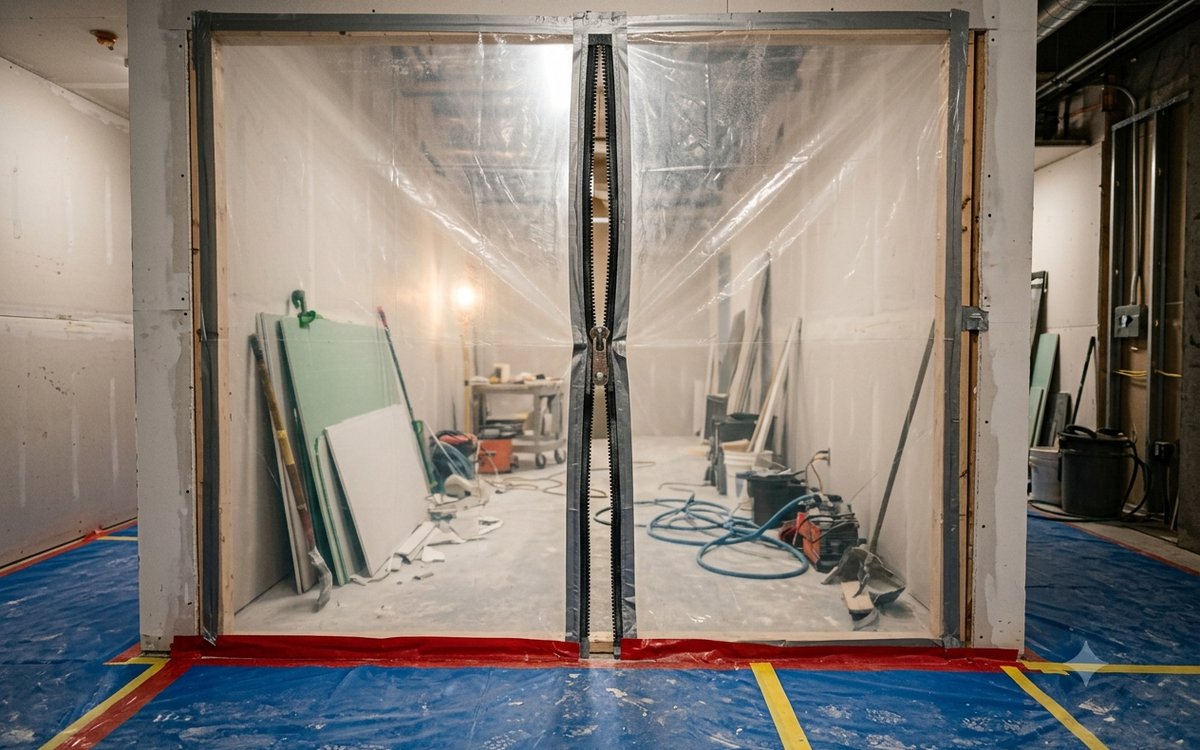
Remediation performed to ANSI/IICRC S520, the American National Standard: contained, HEPA filtered, physically removed, and verified when it is finished.
The standard is unambiguous on this point: physical removal of contamination is the primary means of remediation. Spraying an antimicrobial over mold growth and leaving it in place does not remediate anything. Dead spores remain allergenic, and the material that fed the colony is still in your wall. Encapsulants and biocides have narrow, legitimate uses after removal is complete. They are not a substitute for it.
We work to ANSI/IICRC S520, the American National Standard for Professional Mold Remediation. It defines how contamination is classified, how the work area is isolated, how materials are removed, and how completion is confirmed. Following it is what separates remediation from cleaning.
S520 describes three conditions. Condition 1 is normal fungal ecology, a space whose spore profile matches the outdoors. Condition 2 is settled spores and dust from a nearby source without growth of its own. Condition 3 is actual mold growth. The goal of every project is to return the affected area to Condition 1, and the classification drives how aggressive the containment and cleaning need to be.
Project scale matters as much as condition. The EPA treats roughly ten square feet as the line between a homeowner-manageable cleanup and professional work. Areas beyond one hundred square feet call for full containment, engineering controls, and formal verification.
Wood that reads above roughly sixteen percent moisture content will support fungal growth again. Surfaces can feel dry to the hand while the framing behind them holds enough water to restart the problem, which is why we monitor with meters and log readings daily rather than judging by appearance.
A remediation invoice proves work was performed. It does not prove the work succeeded. Verification, covered in detail on our clearance testing page, is the difference between a clean-looking room and a documented return to Condition 1, and it is the only record that holds up with an insurer or a future buyer.