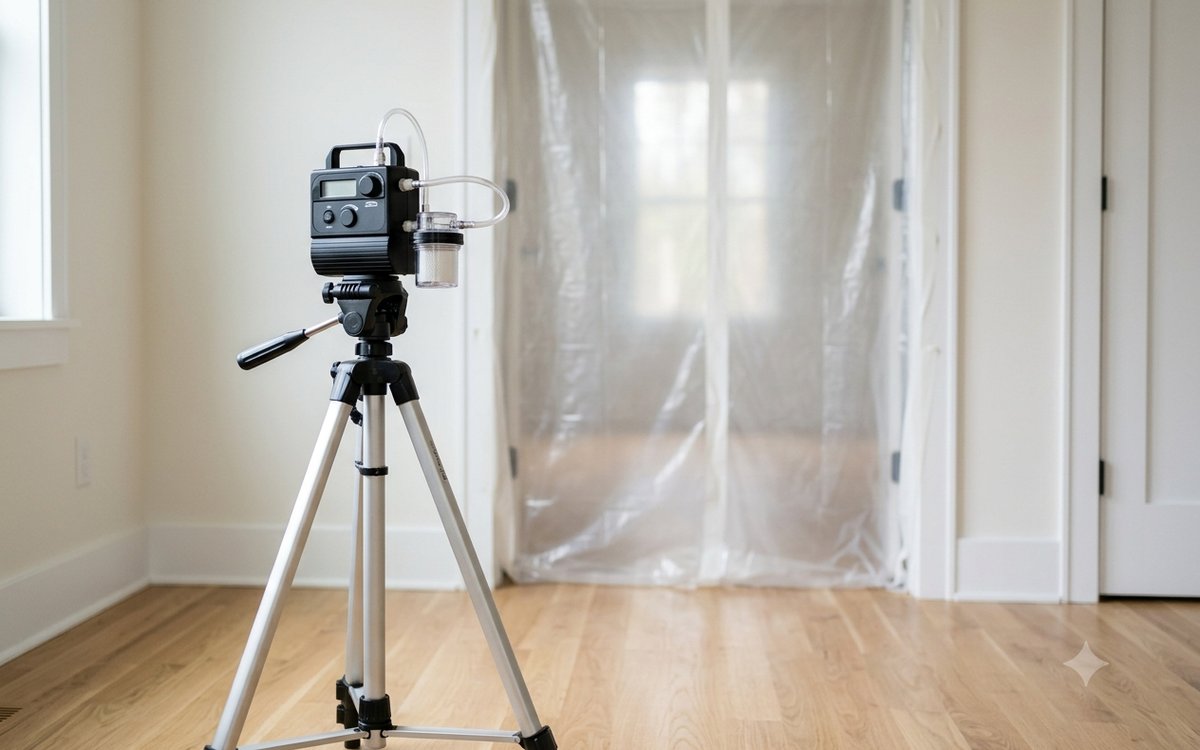
The step that proves remediation worked: visual inspection, moisture verification, and accredited laboratory sampling before containment comes down.
Post-remediation verification, sometimes called clearance testing or PRV, is the step that determines whether a project actually succeeded. A work area can look immaculate while spore counts remain elevated from incomplete cleaning or a containment breach. Without verification there is no objective record that the space was returned to normal, which matters for your insurer, for a future sale, and for your own confidence in moving back into the room.
Clearance is performed after remediation is complete but before containment barriers come down. Once the barriers are removed, the work area is no longer isolated and a sample can no longer tell you anything meaningful about it. Any company that tests after teardown has produced a document, not a verification.
A passing result means the work area has been returned to Condition 1, normal fungal ecology: no visible growth, materials dried to standard, and airborne spore types and concentrations comparable to or below the outdoor reference. If a sample fails, the remaining contamination is identified, the area is re-cleaned, and it is re-tested. On our own projects, re-work and re-testing after a failed clearance are ours to absorb, not yours.
Best practice holds that the party verifying remediation should have no financial stake in the outcome. Some states codify this. Florida law prohibits a company from assessing and remediating the same property within twelve months. Georgia has no such rule, which means a company here can find the mold, sell the removal, and certify its own work with nobody checking.
We think you should know that, including about us. Every sample we collect goes to an accredited independent laboratory that has no interest in the result, and on any project where you want a fully independent assessor to perform the clearance rather than us, we will work with the assessor of your choosing and provide access to the containment. We also perform third-party clearance testing on remediation completed by other contractors.